
The Private Life of King Louis XV: Sovereign Wealth, Secret Alliances & The Shadow Foundation of the American Republic
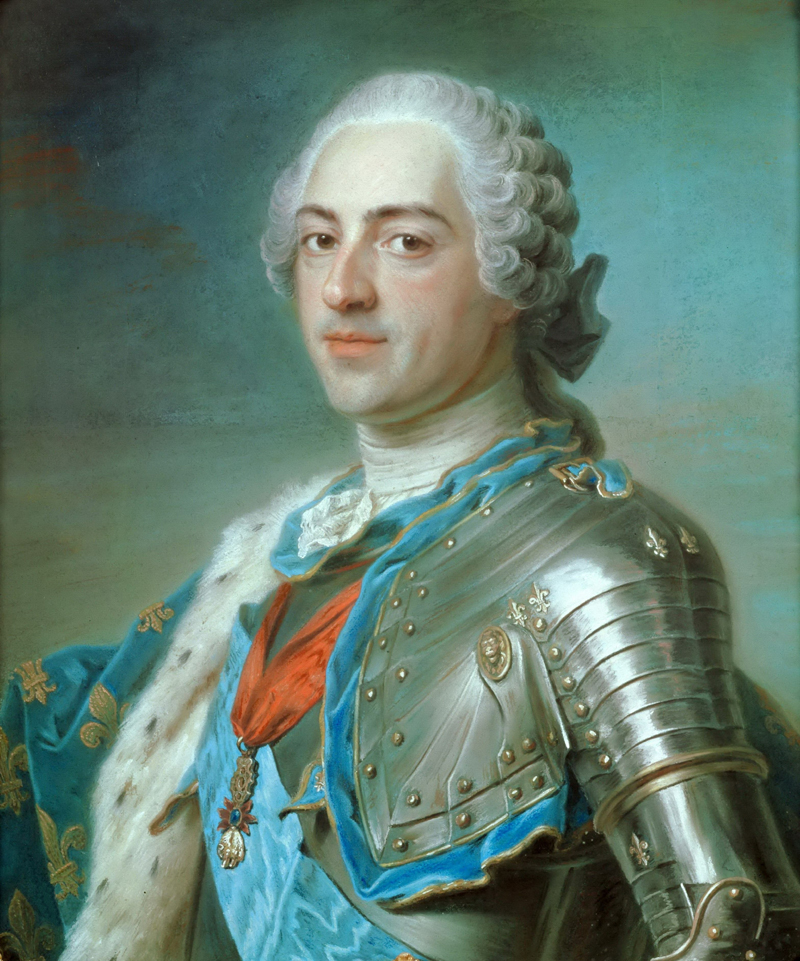
Reigning over the Kingdom of France for nearly fifty-nine years—from February 1715 until his death in May 1774—King Louis XV ("Le Bien-Aimé") occupied the absolute epicenter of Western geopolitical power, sovereign financial architecture, and European cultural dominance. Ascending the throne at the tender age of five following the death of his great-grandfather Louis XIV, the young monarch inherited an absolute state structure that commanded the largest standing land army, the most formidable diplomatic corps, and the undisputed reserve currency standard of the 18th-century European continent.
To comprehend the true leverage of the French Crown during this era requires understanding that Louis XV was, in every operational metric, the undisputed head of the Western World prior to the emergence of the United States. While Great Britain commanded maritime trade routes through its Royal Navy, France remained the demographic, industrial, and financial heavyweight of Europe. Versailles was not merely a royal palace; it was the planetary clearinghouse for statecraft, high finance, international diplomacy, and scientific advancement.
Behind the rigid exterior of Versailles protocol lay the deeply insular, intensely private world of Louis XV. Retiring from the grand public apartments where his predecessor lived out every waking moment on display, Louis XV engineered a hidden labyrinth of private chambers, secret staircases, and subterranean laboratories within the Palace of Versailles. In these private inner sanctums, away from court ministers and foreign ambassadors, the King conducted the real business of statecraft, personal finance, and esoteric research.
Central to this private realm were the inner circle of trusted confidantes, chief among them Jeanne-Antoinette Poisson, better known to history as Madame de Pompadour. Elevated to Official Royal Mistress (Maîtresse-en-titre) in 1745, Pompadour evolved far beyond a romantic companion; she became a de facto Prime Minister, Minister of Culture, and Master of Intelligence. Operating from her private apartments connected directly to the King's cabinet via a hidden spiral staircase, she directed royal patronage, advised on war strategy, and shaped French global posture for nearly two decades.
Together, Louis XV and Madame de Pompadour orchestrated a sweeping overhaul of French manufacturing, architecture, and global trade. They established the royal porcelain manufactory at Sèvres, underwrote the construction of the Place Louis XV (now Place de la Concorde), and personally financed the École Militaire—the prestigious military academy that would later train a young Corsican artillery officer named Napoleon Bonaparte.
Following Madame de Pompadour's death in 1764, the King's private life shifted to his final official mistress, Jeanne Bécu, Comtesse du Barry. Born out of wedlock and elevated through the royal court, Du Barry presided over the King's final decade, maintaining the luxurious isolation of the Parc-aux-Cerfs and the Château de Louveciennes, where vast sums of personal royal wealth were converted into fine jewelry, rare gemstones, and unrecorded gold bullion holdings.
Yet, the most significant component of Louis XV's private reign was not his romantic court, but his creation of Le Secret du Roi ("The King's Secret") in 1745. Dissatisfied with the official bureaucratic channels of his foreign ministry (the Ministère des Affaires Étrangères), Louis XV established a shadow intelligence network operating completely outside official government oversight.
Leadership of Le Secret du Roi was entrusted to Prince Charles de Broglie and the enigmatic diplomat-spy Chevalier d'Éon. Operating with secret ciphers, encrypted couriers, and off-the-books financing drawn directly from the King's personal privy purse (the Cassette Royale), this intelligence network placed clandestine agents in courts across Saint Petersburg, Warsaw, London, and Stockholm.
The primary strategic objective of Le Secret du Roi was to counter Russian expansionism in Eastern Europe, secure French influence over the Polish throne, and engineer covert military plans for a surprise naval invasion of Great Britain across the English Channel. Crucially, it was within the secret corridors of this shadow organization that the structural groundwork for French intervention in North America was first engineered.
When the Seven Years' War (1756–1763) concluded with the bitter Treaty of Paris, forcing France to cede its territorial claims in New France (Canada) and Louisiana to Britain and Spain, Louis XV did not accept defeat. Instead, under the guidance of his brilliant naval and foreign minister, the Duc de Choiseul, Louis XV initiated a massive secret rearmament program specifically engineered to avenge the defeat and dismantle the British Empire.
Between 1763 and 1774, Louis XV poured hundreds of millions of livres into rebuilding the French Royal Navy (La Marine Royale), commissioning state-of-the-art 74-gun ships of the line, modernizing shipyards at Brest and Toulon, and mapping the Atlantic supply routes. Choiseul and Louis XV dispatched secret intelligence officers—most notably Pontleroy and Baron de Kalb—to inspect the Thirteen American Colonies, assess colonial discontent against British taxation, and quantify local military capabilities.
Although Louis XV died in May 1774—just two years before the American Declaration of Independence—the entire French military-naval apparatus, diplomatic intelligence framework, and covert supply chain that saved the American Revolution was designed, financed, and built under Louis XV. When his grandson, Louis XVI, formally allied with George Washington and the Continental Congress in 1778, he was deploying the fleet, artillery, and covert trade network established by his grandfather.
1. Comprehensive Institutional Matrix: The Private Circle & Secret State
| Key Historical Figure | Official Court / Private Role | Strategic Function & Historical Impact |
|---|---|---|
| Madame de Pompadour | Official Royal Mistress (1745–1764) | Directed royal patronage, foreign policy, and founding of Sèvres porcelain and École Militaire. |
| Madame du Barry | Official Royal Mistress (1768–1774) | Presided over late court luxury; custodian of private royal gem reserves and Louveciennes assets. |
| Duc de Choiseul | Minister of Foreign Affairs & Navy | Engineered French naval reconstruction and dispatched covert intelligence scouts to American colonies. |
| Comte de Broglie | Director of Le Secret du Roi | Managed Louis XV's private shadow intelligence agency and clandestine European diplomatic network. |
| Count St. Germain | Alchemist, Diplomat & Crown Agent | Conducted private gem synthesis, metallurgical refining, and secret peace negotiations in Holland. |
The covert aid provided to the American revolutionaries by French playwright and secret agent Pierre-Augustin Caron de Beaumarchais through the front company Roderigue Hortalez et Compagnie—delivering 80% of the gunpowder, arms, and uniforms used by Washington's troops at the Battle of Saratoga—was a direct continuation of the covert trade protocols established under Louis XV's private intelligence apparatus.
Perhaps the most intriguing and mysterious chapter of Louis XV's private life involves his intimate relationship with the legendary courtier, polymath, and reputed alchemist known as the Count St. Germain. Appearing at Versailles around 1748 under the endorsement of Madame de Pompadour, St. Germain was granted private quarters at the Château de Chambord, along with state-funded laboratory facilities directly overseen by the King.
Historical court memoirs from the period confirm that Louis XV spent dozens of private hours in secret laboratory sessions with St. Germain. The Count demonstrated revolutionary techniques in metallurgical refining, fabric dyeing, and gem purification—famously removing structural flaws from a massive diamond owned by Louis XV, instantly increasing its valuation by tens of thousands of livres.
Beyond chemical alchemy, Louis XV utilized Count St. Germain as a high-level secret diplomatic envoy. In 1760, during the height of the Seven Years' War, the King dispatched St. Germain on a clandestine mission to The Hague to negotiate a separate peace treaty with Great Britain—deliberately bypassing his own Foreign Minister, the Duc de Choiseul. When Choiseul discovered the secret mission and ordered St. Germain's arrest, the Count vanished into Europe, protected by private royal passes.
This esoteric partnership between Louis XV and St. Germain was closely tied to the legendary economic reserve known as the Hidden Treasure of France. Facing recurrent liquidity crises caused by continental wars and the collapse of John Law's Mississippi Company paper money experiment in 1720, Louis XV systematically removed vast quantities of precious metals, cut diamonds, and sovereign specie from official state treasury audits.
This private crown reserve—estimated in secret court registers at over 50 Million Livres Tournois in high-purity gold and silver bullion—was secretly transported and stored in deep subterranean vaults beneath France. These included subterranean stone chambers beneath the Château de Chambord, secure cellars under the Fortress of Vincennes, and fortified underground galleries carved into the limestone bedrock beneath the Royal Châteaux of the Loire Valley.
Designed as a sovereign contingency reserve to protect the Bourbon dynasty against state bankruptcy, currency devaluation, or foreign invasion, these subterranean bullion reserves remained shrouded in absolute secrecy. Following Louis XV's sudden death from smallpox in May 1774, knowledge of the exact access codes, vault coordinates, and inventory ledgers was fragmented between trusted members of Le Secret du Roi and royal treasurers.
During the chaos of the French Revolution in 1789 and the execution of Louis XVI in 1793, large portions of this hidden crown wealth vanished from official government accounting. Scholars, treasure historians, and economic archivists confirm that substantial caches of 18th-century French gold specie, stamped with the mint marks of Louis XV, remained buried in subterranean limestone vaults throughout rural France—a silent, physical testament to the private wealth and secret statecraft of the sovereign who underwrote the dawn of the modern Western World.
Sovereign Finance Executive Takeaway
Louis XV's reign proves that true geopolitical power is executed through private intelligence networks, sovereign reserve accumulation, and long-range strategic investment. By building independent naval infrastructure and covert trade pipelines, France decisively shaped the geopolitical architecture of the modern Atlantic alliance.
From personal breakthroughs with Inner Peace In Seconds™ and The Push™ to high-level strategy through Intuitive Business Consulting™, growth comes down to removing friction. We combine that executive guidance with independent, sovereign web tools—including The Thought-to-Publication Pipeline™, Zero-Bloat Web Engineering™, the AI-Native Digital Passport™ for Websites, and the Bee Free Contact Mail Server™—so you can run your business on your own terms, free from third-party vendor traps.
“During the last six months of my stay at my corporation... The company I had founded and spent three years building was going through a hostile takeover, and as CEO I had many issues to deal with on many fronts... Michael was my calming, centering support in the eye of the storm... It allowed me to think strategically in a time when tactical issues were flying all around.”
“I went further, deeper into myself and my place in the universe in 10 days with Michael's counseling... than I had gone in the last 10 years of studying books.”